 Finding RHYTHM: Turning Purpose into Everyday Practice
Justin Robbins, Metric Sherpa
Your mission statement may be clear. Your values may be displayed everywhere. But if those ideas don’t show up in meetings, decisions, recognition, and day-to-day priorities, employees notice.
In this session, Justin Robbins, author of More Than a Motto, will help you close the gap between what your organization says it stands for and what employees actually experience. That disconnect has a cost: people become cynical about culture initiatives, disengage from their work, and struggle to deliver the kind of experience customers remember.
Drawing on research and real-world examples across industries, Justin will show you how everyday leadership habits either reinforce, or undermine, your culture, and how finding a repeatable RHYTHM can make purpose visible when work gets busy.
You’ll leave with practical ways to make purpose actionable and keep work from working against your team. No matter where you lead, you’ll be equipped to build greater ownership, meaning, and stronger employee and customer experiences.
Key Takeaways:
- Diagnose where your stated values break down in the day-to-day employee experience.
- Identify the leadership behaviors and workplace patterns that build trust, commitment, and accountability.
- Design team RHYTHMS that bring purpose into conversations, decisions, and recognition.
- Replace one-time culture initiatives with practical habits that employees can experience consistently.
- Connect a stronger employee experience to more meaningful customer interactions.
 Cleaning the Organizational Junk Drawer
Patrice James, Director of Customer Experience Operations, SunStrong Management
Every organization accumulates clutter over time. Processes are added but rarely retired. Responsibilities shift without clear ownership. Valuable institutional knowledge becomes buried beneath years of workarounds, exceptions, and “the way we’ve always done it.” Like an overfilled junk drawer, organizations often struggle to distinguish what still creates value from what simply takes up space.
In this thought-provoking session, Patrice James introduces a practical framework for helping organizations uncover the hidden complexity that develops as they grow and evolve. By examining how organizational tenure, accumulated knowledge, unclear ownership, and legacy practices influence the way work gets done, attendees will learn how to simplify operations while preserving the expertise that makes their organizations successful.
Rather than treating every process as permanent, Patrice will demonstrate how leaders can identify outdated practices, clarify accountability, and reconnect teams around shared goals and intentional ways of working. The result is an organization that is easier to navigate, more adaptable to change, and better equipped to capture, share, and build upon its collective knowledge.
Whether you’re leading a long-established organization or a rapidly growing team, you’ll leave with practical tools for reducing organizational clutter, strengthening operational clarity, and creating a foundation that supports better decisions, continuous improvement, and future innovation.
Key Takeaways:
- Identify the hidden organizational clutter created by legacy processes, unclear ownership, and institutional habits.
- Learn a practical framework for evaluating what should be preserved, improved, simplified, or retired.
- Strengthen accountability by clarifying ownership and aligning work around shared outcomes.
- Preserve valuable institutional knowledge while eliminating unnecessary complexity.
- Build a more adaptable organization that is better prepared for continuous improvement, organizational change, and future technologies.
 HumanX: Why Better AI Starts with Better Experiences
Bill Price, Author and Founder/CEO, Intendra AI
Artificial intelligence is reshaping customer experience at an unprecedented pace, but many organizations risk applying AI to experiences that were never designed to succeed. Rather than improving outcomes, they simply accelerate customer frustration.
Drawing on insights from his latest book, HUMANX, and his work helping organizations implement AI to improve customer and business outcomes, Bill Price challenges conventional thinking about the role of AI in customer experience. Instead of viewing AI as a replacement for people, he demonstrates how leading organizations are using it to uncover friction, diagnose root causes, strengthen relationships, and create new opportunities for growth.
Through real-world examples, Bill will explore why a significant share of customer demand stems from broken processes rather than work that should be optimized with AI, and how organizations can use AI to identify and resolve those issues before they scale them. He will also examine how AI can augment employee decision-making, uncover actionable insights from customer data in days instead of weeks, and create capacity for more meaningful human interactions.
Attendees will leave with a practical framework for applying AI in ways that improve customer outcomes, empower employees, and build experiences that are both more effective and more human.
Key Takeaways:
- Learn how AI can identify and eliminate the root causes of customer friction before those issues are amplified.
- Distinguish where AI delivers the greatest value and where human expertise remains essential.
- Explore practical ways AI can augment employee decision-making and uncover insights that drive growth.
- Apply Human²X principles to create experiences that strengthen relationships while delivering measurable business impact.
- Build an AI strategy that enhances, not replaces, the human side of customer experience.
 Pricing with Intelligence: Turning Market Signals into Better Decisions
Sri Kantamneni, Executive Vice President, Chief Information & Digital Officer, Schreiber Foods
Pricing is one of the most powerful, and most challenging, levers available to an organization. Yet in an increasingly volatile marketplace, successful pricing depends on far more than cost, competition, or historical performance. It requires organizations to recognize changing market conditions, interpret meaningful signals, and respond with confidence.
In this session, Sri Kantamneni shares how Schreiber Foods is strengthening its commercial intelligence by connecting market signals, operational insights, and business decisions into a more responsive way of working. Drawing on the experience of competing in the highly competitive private label marketplace, Sri will explore how organizations can move beyond looking at yesterday’s results to making more informed decisions about tomorrow’s opportunities.
Attendees will learn how leading organizations identify the information that truly matters, overcome organizational barriers that slow decision-making, and create stronger alignment between market realities and commercial strategy. While pricing serves as the lens for this discussion, the principles extend across marketing, operations, finance, and executive leadership, demonstrating how better intelligence leads to better business decisions.
Whether you’re responsible for pricing, product management, marketing strategy, or business performance, you’ll leave with practical ideas for building the organizational capabilities needed to respond more effectively to changing markets and create sustainable competitive advantage.
Key Takeaways:
- Understand how market signals can strengthen pricing and broader commercial decision-making.
- Learn why historical reporting alone is no longer sufficient in rapidly changing markets.
- Explore how leading organizations connect market intelligence with operational and commercial decisions.
- Identify organizational barriers that prevent timely, informed decision-making.
- Discover practical approaches for building commercial intelligence that supports long-term growth and competitive advantage.
 The New Promotional Mix: Balancing Competing Expectations
Kikora Mason, Communications Leader and Cultural Strategist
Marketing has never been more complex. Today’s organizations communicate in an environment where customers are only one of many audiences paying attention. Employees, investors, regulators, community leaders, advocacy groups, and the public all influence how brands are perceived—and their expectations don’t always align.
In this thought-provoking session, Kikora N. Mason explores how organizations can navigate competing priorities while remaining authentic to their mission and values. Drawing on her experience leading communications and community engagement initiatives for large, highly visible organizations, she will share practical insights into building trust across diverse audiences, responding thoughtfully to complex issues, and making strategic communication decisions when there is no single “right” answer.
Rather than treating promotion as a one-way marketing function, attendees will explore how modern organizations can build credibility through transparency, consistency, and intentional engagement. Kikora will introduce her CLEAR framework — Context, Listeners, Expectations, Alignment, and Response — a practical model for evaluating competing interests, establishing communication principles before difficult moments arise, and adapting messaging without compromising organizational integrity.
Whether your role involves marketing, communications, customer experience, or organizational leadership, you’ll leave with practical approaches for navigating today’s increasingly interconnected communications landscape while strengthening trust in your brand.
Key Takeaways:
- Understand how today’s promotional landscape extends far beyond traditional customer communications.
- Learn practical approaches for balancing the needs and expectations of customers, employees, investors, regulators, and the communities your organization serves.
- Explore communication strategies that strengthen trust during moments of competing priorities and heightened public attention.
- Apply the CLEAR framework — Context, Listeners, Expectations, Alignment, Response — to make consistent, values-based communication decisions.
- Build greater organizational confidence in navigating complex relationships while protecting long-term brand credibility.
 The Growth Imperative: Reinventing Brands for New Generations
Allison Murn, Brand Growth Consultant, Illuminiting; Adjunct Professor, University of Minnesota
A strong brand is built over years, even decades, but maintaining its relevance requires continual evolution. As customer expectations shift and organizations navigate the growing influence of employees, communities, investors, regulators, and other stakeholders, legacy brands must find new ways to communicate their value without losing sight of what made them successful in the first place.
In this engaging session, Allison Murn explores how established organizations can evolve their core value proposition to remain relevant in a rapidly changing world. Through practical examples and proven strategies, she will demonstrate how leading brands balance heritage with innovation, strengthen trust across diverse customer groups, and adapt their messaging while preserving the authenticity that customers have come to expect.
More than a marketing challenge, brand evolution requires thoughtful alignment between organizational purpose, customer experience, product value, and strategic priorities. Attendees will learn how successful organizations identify changing expectations, evaluate where their brand needs to evolve, and communicate that evolution in ways that deepen trust rather than dilute identity.
Whether your organization has been around for ten years or one hundred, you’ll leave with practical ideas for honoring your brand’s legacy while positioning it for continued relevance, growth, and impact.
Key Takeaways:
- Understand the forces reshaping expectations and what they mean for established brands.
- Learn how to evolve your brand’s value proposition without losing the trust and recognition you’ve earned.
- Explore practical strategies for aligning purpose, customer experience, and brand positioning.
- Identify opportunities to modernize messaging while preserving authenticity and organizational identity.
- Build a roadmap for keeping your brand relevant to customers, employees, partners, investors, and other key groups for years to come.
 Purpose at the Speed of Change: Sustaining Trust, Engagement, and High Performance Through Transformation
Mindy Geisser, Chief People Services Officer, Savers
Every organization is transforming—new technology, new business models, new expectations of work itself. But transformation has a hidden cost that shows up on no project plan: it burns trust, strains engagement, and tests every promise a company has made to its people. The organizations that come through stronger aren’t the ones with the best change methodology. They’re the ones whose people still believe.
Mindy Geisser has led people strategy through nearly every kind of transformation an enterprise can face—across technology, real estate, and consumer sectors, at companies including Amazon, Philips Medical Systems, Colliers International, and now Savers Value Village, the purpose-driven thrift retailer whose mission makes reuse a force for good. Across three decades of global HR leadership, she has learned that purpose is not a poster on the wall—it’s the operating system that keeps trust, engagement, and performance alive when everything else is in motion.
In this session, Mindy will share how people leaders can anchor their organizations in purpose while everything around them changes—how to keep leaders visible and credible, keep teams connected to why the work matters, and keep performance high without burning people out. Practical, honest, and drawn from real transformations, this is a session for every leader who has to deliver change and preserve what makes their culture worth keeping.
Key Takeaways:
- How to use purpose as a practical leadership tool—not a slogan—to sustain trust and engagement when transformation puts both under pressure.
- Field-tested practices from three decades of global people leadership for keeping teams high-performing, connected, and resilient through continuous change.
 The Human Edge: Leading Your Workforce Through the Now and the Next
Becky Frankiewicz, President & Chief Strategy Officer, ManpowerGroup
Seventy percent of the skills needed for the average job are expected to change by 2030—yet more than half of employees say they received no workplace training in the past year. That gap between the speed of change and the pace of preparation is the defining people challenge of this decade. And no one sees it more completely than Becky Frankiewicz.
As President and Chief Strategy Officer of ManpowerGroup, Becky views the labor market from a vantage point no single company can match—across industries, geographies, and the full spectrum of work, from the front line to the C-suite. Fresh from the World Economic Forum in Davos, where ManpowerGroup released its landmark Human Edge global research and helped launch a national initiative to prepare one million young people for the future of advanced manufacturing, Becky brings our community the view from the very front of the future of work.
In this keynote, Becky will share the forces reshaping every workforce—hybrid super teams, rapid relearning, changing norms, and the coming succession crisis—and her defining framework for leading through the Now and the Next: delivering today’s performance while building tomorrow’s capability. Most importantly, she’ll make the case that in an age of accelerating technology, the durable advantage is human.
Key Takeaways:
- The four forces reshaping the global workforce—and how to read their signals inside your own organization before they become crises.
- A practical framework for leading through the Now and the Next: balancing today’s performance with deliberate investment in tomorrow’s skills, so your people—and your business—stay future-ready.
 The Learning Society: Why Talent Development Is Now Everyone’s Business
Mitchell Stevens, Professor, Stanford
Our institutions were built for a world where education happened once, early, and somewhere else—school prepared you, then work employed you. That world is gone. Careers now span fifty years and multiple reinventions. AI is rewriting job descriptions faster than degree programs can keep up. And the assumption that someone else develops your talent—a university, a government, a previous employer—has quietly become one of the biggest strategic risks facing American companies.
Mitchell Stevens has spent his career studying how societies grow talent, and he brings our community a big, urgent idea: the shift from a “schooled society”—where credentials are the finish line—to a “learning society,” where working is learning and every institution that benefits from talent shares responsibility for developing it. Through Stanford’s Learning Society project and the Futures Project on Education and Learning for Longer Lives, Mitchell has convened educators, business leaders, organized labor, and policymakers to design what comes next—and employers sit at the center of that design.
In this session, Mitchell will make the case for why the moment is urgent, what the learning society looks like in practice, and what forward-thinking companies can do—starting now—to become the kind of organizations where people grow for the length of a fifty-year career. For people leaders, this is the rare session that reframes the entire game: not how to fill today’s roles, but how to build an enterprise where learning is the work.
Key Takeaways:
- Why the “schooled society” model of talent development no longer serves companies or workers—and the core principles of the learning society emerging to replace it, including “working is learning” and “credentials are a means, not an end.”
- Concrete ways employers can share responsibility for talent development across the lifespan—and turn learning capability into a durable competitive advantage in an era of AI and longer working lives.
 Architecting Agility: Building Leadership Platforms that Actually Move the Needle
Antonia Turnquist, Director of Talent Strategy & Acceleration, Zendesk
Every transformation plan assumes your leaders can lead it. Few organizations actually prepare them to. As AI reshapes how work gets done, the difference between companies that transform and companies that stall comes down to one question: can you mobilize and activate your leaders fast enough to carry the change?
Antonia Turnquist has spent nearly twenty years answering that question inside high-stakes business transformations—scaling emerging businesses and steering large enterprises through complex change as a trusted advisor to CEOs and executive teams. At Zendesk, she designs the leadership platforms—the systems, capabilities, and activation strategies—that turn a company’s leaders from bystanders of transformation into its engine. Her approach is intentional and data-driven, bridging human behavior and business strategy to deliver outsized impact.
In this fast-moving session, Antonia keeps it refreshingly practical: what a leadership platform actually is, how to build one that moves the needle, and the lessons she’s learned mobilizing leaders through AI transformation—including what didn’t work and why. You’ll leave with tips and tools you can take back and run with at your own organization, whatever transformation you’re facing next.
Key Takeaways:
- How to design a leadership platform—the capabilities, systems, and activation strategies that equip leaders to successfully carry AI (or any other) transformation through your organization.
- Practical, field-tested tips and lessons learned for mobilizing and activating leaders at every level—simple enough to start applying the week you return.
 International Trade and the Macroeconomic Environment: Staying Ahead of the Game
Pete Mento, Director of Global Trade Advisory Services, Baker Tilly
The international trade environment – and related tariff policies – have been ever-changing in the past 18 months. Thankfully there are experts like Pete Mento who help companies navigate complex international trade and customs challenges and turn policy risk into measurable financial and operational value. He has amassed 34,000 followers on LinkedIn who watch for his frequent and insightful updates, often more timely and easier to understand than those from major news outlets.
Pete will share his thoughts on the macroeconomic environment and specifically international trade policies and what they mean for your business. He offers practical advice to stay ahead of future updates and how to leverage your partners to make timely and savvy decisions to minimize trade risk in your organization.
Key Takeaways:
- How to stay on top of trade updates, and who to partner with to make timely and savvy decisions.
- How leaders can support their trade compliance teams and partners to achieve the best business outcomes.
 Leadership, Partnership, and Solving Problems over Glorifying Solutions
Sean Halligan, Executive Vice President of Operations, Medline
As an executive supply chain leader at some of the top companies – Target, Nike, Cardinal Health, Wayfair and now Medline – Sean has led cross-functional teams focused on global logistics, warehouse automation, and much more. In each role, Sean modeled the way with team-first leadership and strong internal and external partnership, showcasing his skills as a clear communicator.
Sean will share with us some of his leadership lessons, using stories from these experiences as practical examples. He’ll also share one of his most important lessons in the age of AI and Automation: how to focus on solving problems without getting distracted by the promise of idle solutions.
Key Takeaways:
- How leadership and partnership help you tackle the most complex supply chain challenges and disruptions.
- Find the right tool for the right job – with the right team – as a recipe for supply chain success.
 Leadership Lessons on Business Transformation
Kari Mahaffey, Senior Vice President – North America Applications, Oracle
Whether it’s called a “Supply Chain Transformation”, “Business Transformation”, or “Digital Transformation”, most companies are undergoing major change. Supply chain leaders need to make sure their teams are ready for these changes, applying new ways of thinking, and fully adopting and leveraging the technology investments their companies are making.
As Senior Vice President of North America Applications at Oracle, Kari Mahaffey has had a front row seat to some of the largest, most complex business transformations. She has seen what works in these large endeavors, and what doesn’t. She will share some frameworks and implementation scenarios to help participants apply these learnings to their own business transformations.
Kari will focus on key concepts like how to assess your team’s readiness for transformation, the mindset shift needed to maximize your transformation, and what continuous improvement looks like after the implementation date.
Key Takeaways:
- Common pitfalls in business transformation—and where companies are maximizing their technology investments.
- New ways of thinking in the modern “business-first” transformation environment.
 TITLE
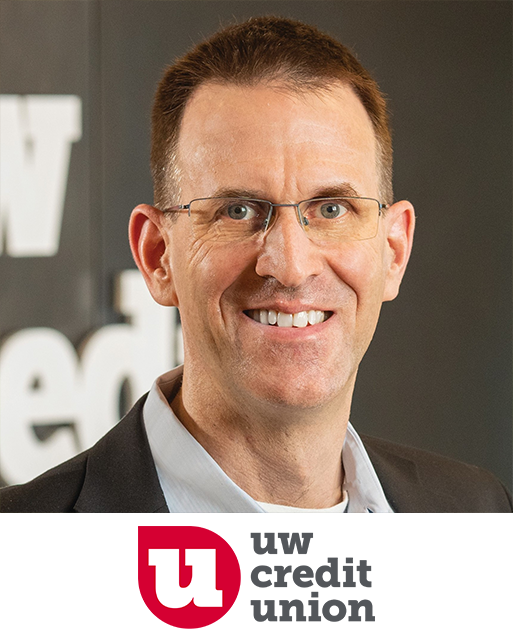
Ralph Buelling, EVP/Chief Information Officer, UW Credit Union
Info
Key Takeaways:
- 1
- 2
- 3
 Inside the AI Super Factory: Datacenters, Myths, and the Workforce of the Future
Christa Markgraff, General Manager of Datacenter Operations, Microsoft
Microsoft’s Fairwater datacenter is one of the most significant technology investments in Wisconsin’s history, and its impact reaches well beyond the fence line. In this session, Christa Markgraff, Central Region Leader for Microsoft’s Data Center Operations, takes attendees inside the emerging datacenter economy and what it means for the region’s businesses, workers, and utility partners.
Christa will explain how a modern AI datacenter actually works and address the questions business leaders are asking directly, including the realities of water and electricity use and the myths that often surround them. Just as important, she will look ahead to the workforce these operations demand and the unique skillsets behind the cloud, exploring what the rise of AI infrastructure means for the worker of the future and what we should be telling today’s students about the college and trade paths that lead into this economy. Attendees will leave with a clearer, fact-based understanding of the infrastructure powering the AI era and a grounded sense of where their organizations, and their future talent, fit within it.
 TITLE
Mike Bechtel, Inventor, Investor, Futurist, Professor
Content
Key Takeaways:
- 1
- 2
- 3