Rebecca Wlazlo, Senior Vice President Supply Chain, Crate and Barrel
We are thrilled to announce Rebecca Wlazlo will be kicking off our Supply Chain track at this year’s Annual Conference.
Rebecca is a supply chain executive with a passion for leading and developing high-performing teams to solve complex problems and deliver outstanding results. She has a deep supply chain background gained with Fortune 100 CPG and retail companies such as PepsiCo, Target, Ulta and The TJX Companies.
Make sure to revisit this page soon to learn more about Rebecca’s session.
Rebecca Wlazlo
Senior Vice President Supply Chain, Crate and Barrel
Rebecca is a supply chain executive with a passion for leading and developing high-performing teams to solve complex problems and deliver outstanding results. She has a deep supply chain background gained with Fortune 100 CPG and retail companies such as PepsiCo, Target, Ulta and The TJX Companies.
A constant learner, Rebecca has a BA in Journalism and East Asian Studies (Japanese) from Indiana University and an MBA in Supply Chain and Marketing from the University of Chicago Booth School of Business. She is known as an excellent mentor, teacher and coach, and founded the Boston chapter of Chief, the private network for executive women that was recently recognized as one of TIME’s 100 Most Influential Companies.
Adaptive Sales & Operations Planning (S&OP): Allowing Teams to Win
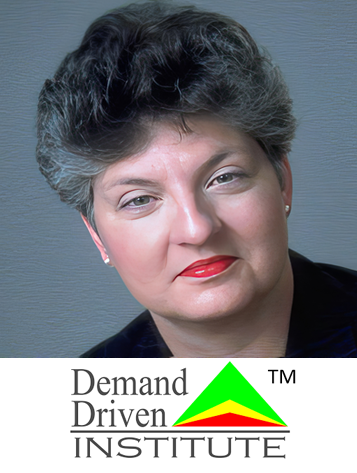
Carol Ptak, Partner, Demand Driven Institute LLC
As a leader of the global “demand-driven movement” – and a supply chain leader before the term “supply chain” even existed – Carol Ptak has spent her career helping teams understand the bullwhip effect, the root cause of why inventory levels fluctuate, and the influence the teams to develop new ways of thinking about demand planning. In this presentation, Carol will share lessons learned from a career in supply chain and how she influences global teams to change the way they plan, operate, think, and adapt to the volatile, uncertain, complex, and ambiguous (VUCA) world.
Key session takeaways:
How to help your teams move from a “cost” mindset to a “flow” mindset.
Which metric(s) create a win-win for all teams in your organization.
Carol Ptak
Partner, Demand Driven Institute LLC
Carol Ptak is a renowned figure in the world of demand-driven methodologies and the founder of Demand Driven Institute. She has co-authored several pivotal books (including “Necessary but not Sufficient” with Eli Goldratt) and led the global demand-driven movement. Her insights and strategies have transformed how organizations approach supply chain management, making systems more responsive, agile, and efficient.
Carol’s career in supply chain includes serving as President of APICS and technology leadership at IBM and PeopleSoft. She is the namesake for the International Supply Chain Education Alliance (ISCEA) Ptak Prize for Supply Chain Excellence and the Ptak scholars program.
People: The Most Critical and Volatile Part of Your Supply Chain
Steve Hunt, PhD, Workforce Psychologist & Technologist, Author of Talent Tectonics
The pandemic reminded companies how critical a stable workforce is for supply chain operations. People can be amazingly productive, depressingly counterproductive (or not show up at all), and can quickly switch from one to another based on how they are treated. Dr. Steve Hunt will discuss how employee expectations are being reshaped by demographic shifts in the labor market, the impact of digitalization on work, and what companies must do to adapt their supply chains to a world of chronic skill shortages and accelerating business change.
Key session takeaways:
How to lead teams through change in a way that is energizing vs overwhelming.
Which skills are emerging as most critical in the new world of work, and how to build them.
Steve Hunt, PhD
Workforce Psychologist & Technologist, Author of Talent Tectonics
Dr. Hunt’s work focuses on using technology to build stronger workforces through improving employee experience, development, engagement, inclusion, and well-being. He has helped hundreds of organizations spanning almost every industry and was recognized by the American Psychological Association for advancing applied psychological science through the creation of technology solutions that have positively influenced millions of employees around the globe. His most recent book Talent Tectonics: navigating global workforce shifts, building resilient organizations, and reimagining the employee experience became the #1 fastest selling new HR book on Amazon upon its release.
AI in Supply Chain: Separating Hype from Reality
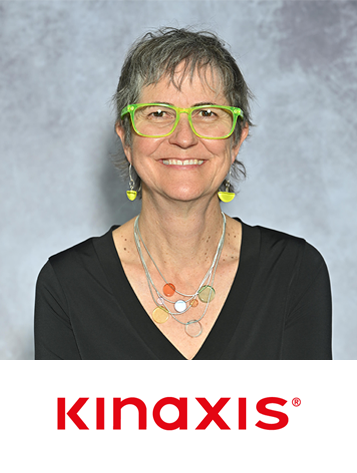
Polly Mitchell-Guthrie, Supply Chain Thought Leader, Kinaxis
As UW–Madison statistics professor George Box once said: ” All models are wrong, some are useful.” Contrary to the hype, AI isn’t useful for everything, but how do you incorporate it to actually make an impact in your supply chain? Polly Mitchell-Guthrie will be showcasing some examples of what it is NOT good at as well as the keys to maximizing its use in supply chains.
Key session takeaways:
Understanding the relationship between descriptive, predictive, and prescriptive analytics and how they relate to artificial intelligence.
How to choose AI projects that will drive maximum usage and insight.
Polly Mitchell-Guthrie
Supply Chain Thought Leader, Kinaxis
Polly Mitchell-Guthrie is the Supply Chain Thought Leader at Kinaxis, a recognized leader in end-to-end supply chain orchestration powered by AI. Previously, she was Director of Analytical Consulting Services at the University of North Carolina Health Care System and worked in various roles at SAS, in Advanced Analytics R&D, as Director of the SAS Global Academic Program, and in Alliances. She has an MBA from the Kenan-Flagler Business School of the University of North Carolina at Chapel Hill, where she also received her BA in Political Science as a Morehead Scholar. Polly is a member of the Foresight Advisory Board for the International Institute of Forecasters, has been very active in INFORMS (the leading professional society for operations research and analytics), and co-founded the third chapter of Women in Machine Learning and Data Science (now more than 100 chapters worldwide).